The history of knowledge is a great fugue in which the voices of the nations one after the other emerge.
The further knowledge advances, the nearer we come to the unfathomable: the more we know how to use our knowledge, the better we see that the unfathomable is of no practical use.
The bulk of the world’s knowledge is an imaginary construction.
The beginning of wisdom, as they say. When you’re seventeen you know everything. When you’re twenty-seven if you still know everything you’re still seventeen.
The beginning of religion, more precisely its content, is the concept of religion itself, that God is the absolute truth, the truth of all things, and subjectively that religion alone is the absolutely true knoweldge.
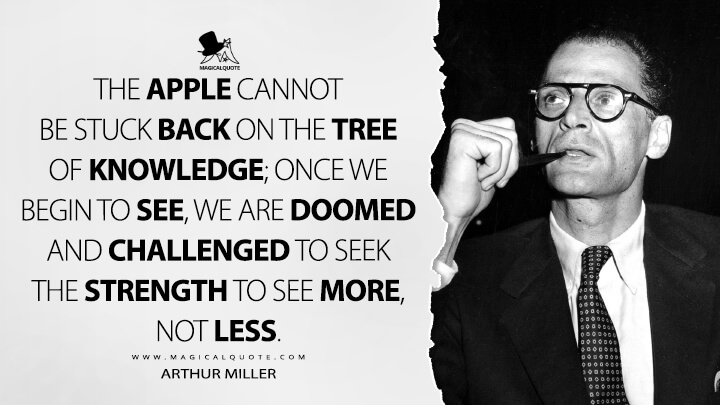
The apple cannot be stuck back on the Tree of Knowledge; once we begin to see, we are doomed and challenged to seek the strength to see more, not less.
That is just the way with some people. They get down on a thing when they don’t know nothing about it.
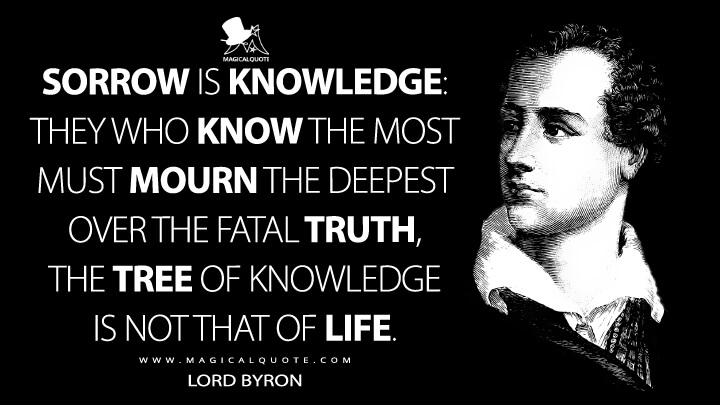
Sorrow is Knowledge: they who know the most must mourn the deepest over the fatal truth, the Tree of Knowledge is not that of Life.
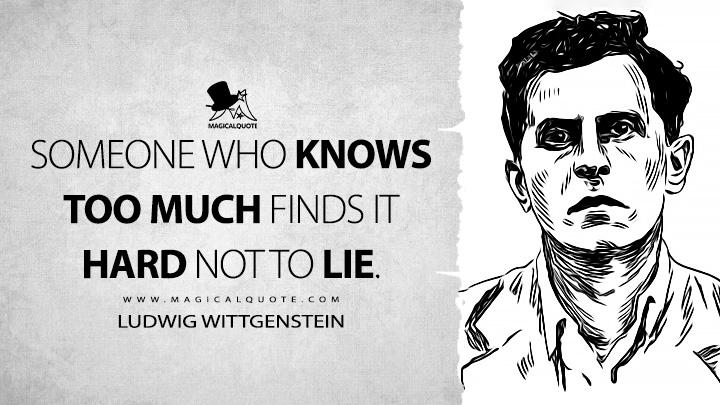
Someone who knows too much finds it hard not to lie.[Wer zu viel weiß, für den ist es schwer nicht zu lügen.]
So long as we do not depend on the facts entirely, incomplete knowledge is better than complete ignorance.
So long as God seems to be outside and far away, there is ignorance. But when God is realised within, that is true knowledge.
Scientific knowledge is a body of statements of varying degrees of certainty – some most unsure, some nearly sure, but none absolutely certain.