Montaigne’s Legacy of Wisdom: How His Quotes Can Transform Your Mindset
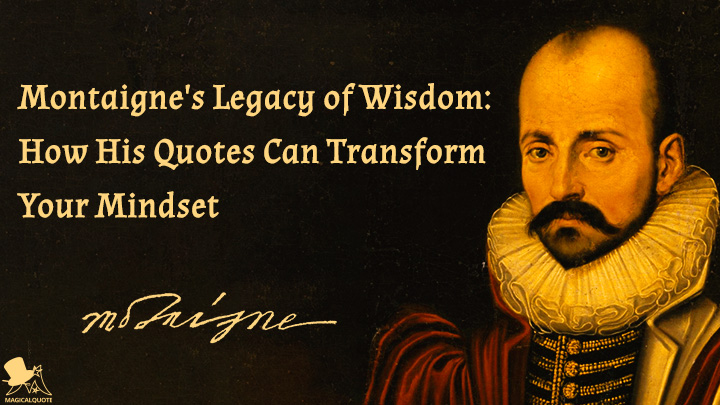
Michel de Montaigne (born February 28, 1533, Château de Montaigne, near Bordeaux, France – died September 23, 1592, Château de Montaigne, France) was a French writer known for establishing a new literary form with his groundbreaking work, Essais (Essays).
Montaigne’s reflective, personal approach to writing allows readers to engage with his thoughts on subjects such as the self, society, morality, and death. His ability to ponder deeply on seemingly simple aspects of life encourages readers to reflect on their beliefs and attitudes.
Fun Facts
-
- Michel de Montaigne’s birthdate served as the foundation for establishing National Essay Day in the United States.[1]
- The humanities division of the University of Bordeaux is named in his honor: Université Michel de Montaigne Bordeaux 3, recognizing his profound impact on philosophy and the written word.[2]

Poverty of goods is easy to cure, poverty of soul impossible. The works of Michael de Montaigne (ed. J. W. Moore, 1849), Book III, Chapter I, Page 390
Montaigne emphasizes that material wealth is fleeting and can be acquired or lost, but inner fulfillment and spiritual richness are far more enduring. True wealth lies in cultivating a contented and fulfilled soul, not in the accumulation of external possessions. Reflecting on this quote encourages a shift from seeking material success to focusing on personal growth and emotional well-being. It inspires individuals to prioritize inner contentment, recognizing that true happiness comes from within, not from external circumstances.
Nothing is so firmly believed as what we least know.The works of Michael de Montaigne (ed. J. W. Moore, 1849), Book I, Chapter XXXI, Page 119
Montaigne's quote highlights how humans tend to cling most strongly to beliefs and ideas we understand the least. This reflects our tendency to fill gaps in knowledge with assumptions or certainties, often with little evidence. The quote challenges us to approach unknowns with humility, recognizing that our strongest convictions may be based on the weakest foundations.

He who fears he shall suffer, already suffers what he fears. Essays of Montaigne (ed. William Carew Hazlitt, 1877), Volume 3, Book III, Chapter 13, Page 419
This quote speaks to the power of fear and its ability to create suffering even before the feared event occurs. It suggests that fear itself can be more painful than the actual experience, emphasizing the importance of cultivating resilience and mindfulness. Rather than anticipating suffering, we are encouraged to confront fears in the present, recognizing that our anxieties often cause unnecessary distress.
In truth, it is not want, but rather abundance, that breeds avarice. The Complete Works of Montaigne (tr. Frame, ed. Stanford University Press, 1958), Book I, Chapter 14, Page 43
Montaigne's quote suggests that the desire for more is not born from lack, but from excess. It challenges the common belief that poverty or scarcity leads to greed, instead pointing out that when people have plenty, their craving for even more grows. This insight encourages a shift in mindset towards appreciating what we have, rather than constantly striving for more.
The mind that has no fixed goal loses itself; for, as they say, to be everywhere is to be nowhere. Essays of Montaigne (tr. Ives, ed. Harvard University Press, 1925), Volume I, Book I, Chapter VIII, Page 39
Montaigne emphasizes the importance of having clear goals and direction. Without focus, the mind becomes scattered, unable to achieve anything meaningful. This quote encourages individuals to prioritize their goals, recognize the value of commitment, and avoid getting lost in distractions. It suggests that clarity of purpose leads to a more fulfilling and focused life.
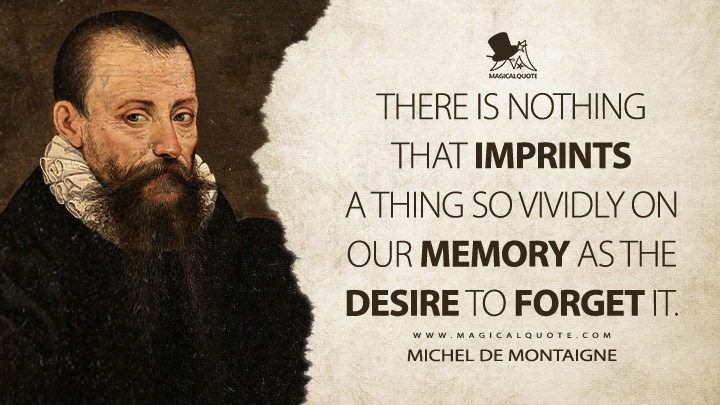
There is nothing that imprints a thing so vividly on our memory as the desire to forget it.The Complete Works of Montaigne (tr. Frame, ed. Stanford University Press, 1958), Book II, Chapter 12, Page 365
Montaigne highlights a paradox of human nature: the more we try to forget something, the more we tend to remember it. This suggests that resistance to certain thoughts or experiences can actually strengthen their presence in our minds. By accepting rather than avoiding difficult memories, we can reduce their grip and regain control over our thoughts. The study 'Ironic Effects of Thought Suppression' found that the more individuals attempted to suppress unwanted memories, the more those memories returned.[3]

Obstinacy and heat of opinion is the surest proof of stupidity.The Complete Works of Montaigne (tr. Frame, ed. Stanford University Press, 1958), Book III, Chapter 8, Page 717
Montaigne suggests that an unwillingness to reconsider one's views, especially when held with intense conviction, is often a sign of close-mindedness. This quote encourages intellectual humility, urging individuals to embrace openness and flexibility. Acknowledging that our beliefs can evolve fosters understanding and personal growth.

The advantage of living is not measured by length, but by use; some men have lived long, and lived little; attend to it while you are in it. It lies in your will, not in the number of years, for you to have lived enough.The Complete Works of Montaigne (tr. Frame, ed. Stanford University Press, 1958), Book I, Chapter 20, Page 67
This quote encourages a shift from counting years to making the most of each moment. It challenges us to focus on quality of experience, intention, and fulfillment rather than simply the passage of time. By cultivating awareness and purpose, we enrich the life we live, regardless of its length.

The beautiful souls are they that are universal, open, and ready for all things.The works of Michael de Montaigne (ed. J. W. Moore, 1849), Book II, Chapter XVII, Page 331
Montaigne emphasizes that the true beauty of the soul lies in its openness and adaptability. Beautiful souls reject narrow perspectives and rigid beliefs. They remain open, welcoming, and eager to embrace the richness of diverse experiences and ideas. This quote promotes a shift towards openness, fostering curiosity and acceptance in all aspects of life.
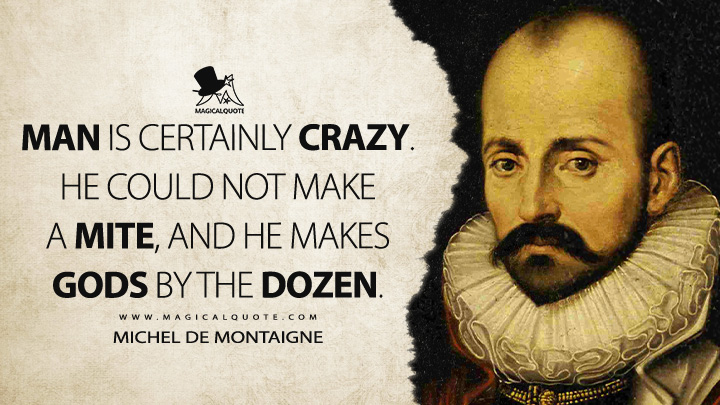
Man is certainly crazy. He could not make a mite, and he makes gods by the dozen.The Complete Works of Montaigne (tr. Frame, ed. Stanford University Press, 1958), Book II, Chapter 12, Page 395
Montaigne reflects on the paradox of human nature: despite our limitations in understanding and creation, we often create complex systems of belief and worship. This quote challenges us to question our beliefs and the systems we make, urging us to approach our convictions with a critical and humble mindset. It encourages us to recognize the power of human imagination and be mindful of its limitations.
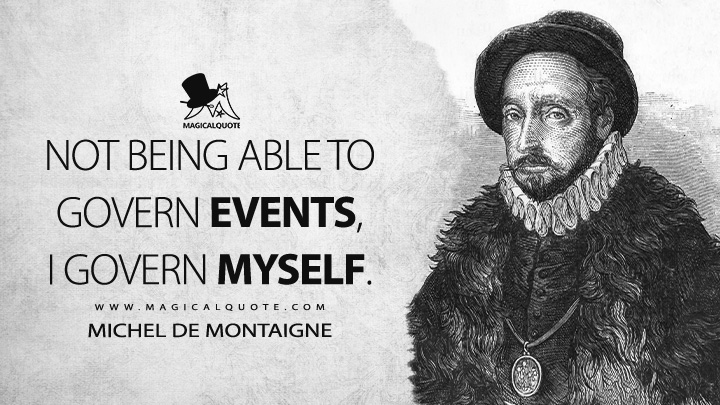
Not being able to govern events, I govern myself.Essays of Montaigne (ed. William Carew Hazlitt, 1877), Volume II, Book II, Chapter 17, Page 425
Montaigne emphasizes the importance of self-control in the face of life's unpredictability. While we cannot always control external events, we have the power to govern our reactions, emotions, and decisions. This quote encourages a mindset shift towards personal responsibility, highlighting that true strength lies in mastering ourselves rather than trying to control everything around us.
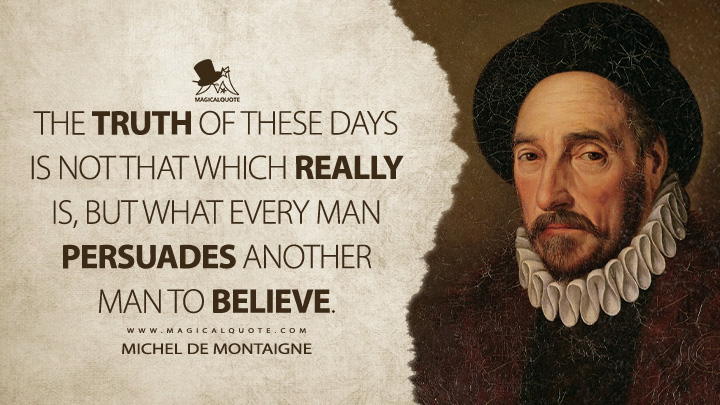
The truth of these days is not that which really is, but what every man persuades another man to believe.Essays of Montaigne (ed. William Carew Hazlitt, 1877), Volume 2, Book II, Chapter 18, Page 453
What we accept as truth is often shaped more by persuasion, social influence, and consensus than objective reality. This quote encourages a mindset shift towards critical thinking, urging individuals to question the 'truths' presented and seek deeper understanding rather than simply accepting prevailing narratives.
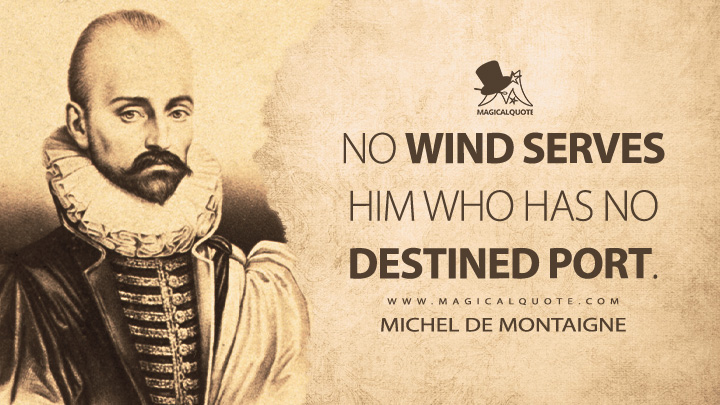
No wind serves him who has no destined port.The works of Michael de Montaigne (ed. J. W. Moore, 1849), Book I, Chapter XXVII, Page 106
The citation above underscores the importance of having a clear goal or purpose. Without direction or a defined destination, one is easily lost or directionless, no matter how much external help or opportunity arises. This insight encourages individuals to establish clear intentions and focus on their purpose, as only then will they be able to make the most of the opportunities and resources available.

A good marriage was one made between a blind wife and a deaf husband.The Complete Works of Montaigne (tr. Frame, ed. Stanford University Press, 1958), Book III, Chapter 5, Page 663
Montaigne humorously points out that, in marriage, certain qualities—like not hearing complaints or not seeing flaws—might contribute to harmony. This quote highlights the role of tolerance and compromise in relationships, suggesting that sometimes ignorance or detachment can help prevent unnecessary conflict.

Fortune, seeing she could not make fools wise, she has made them fortunate.The works of Michael de Montaigne (ed. J. W. Moore, 1849), Book III, Chapter VIII, Page 458
While wisdom is beyond the reach of those who lack it, fortune (luck) often seems to favor them regardless. This quote challenges us to reflect on the role of luck in our lives, recognizing that sometimes, success or happiness is not always the result of wisdom or effort.

The greatest thing in the world is to know how to belong to oneself.The Complete Works of Montaigne (tr. Frame, ed. Stanford University Press, 1958), Book I, Chapter 39, Page 178
With this quotation, Montaigne highlights the importance of self-awareness and independence. This quote suggests that true freedom and fulfillment come from understanding and accepting oneself rather than seeking validation or belonging from external sources. It encourages individuals to cultivate a strong sense of self, which leads to inner peace and autonomy.
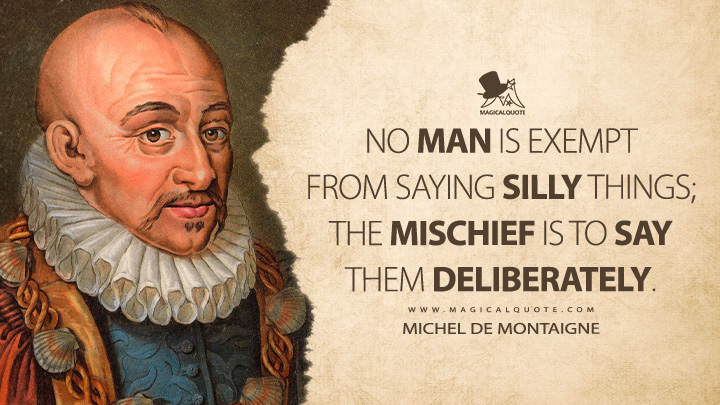
No man is exempt from saying silly things; the mischief is to say them deliberately.The works of Michael de Montaigne (ed. J. W. Moore, 1849), Book III, Chapter I, Page 390
The quotation highlights the inevitability of making mistakes or saying things we later regret. The problem, Montaigne suggests, lies in doing so intentionally or without self-reflection. This quote encourages us to be mindful of our words, promoting thoughtful communication and self-awareness.

All other knowledge is hurtful to him who has not the science of goodness.Essays of Montaigne (ed. William Carew Hazlitt, 1877), Volume I, Book I, Chapter 24, Page 162
Knowledge without virtue is incomplete and potentially harmful. True wisdom lies in understanding the world and living a good and moral life. This quote encourages us to prioritize ethical understanding alongside intellectual pursuits, as true fulfillment comes from acting in alignment with moral values.
The Complete Works Of Michael De Montaigne on Amazon
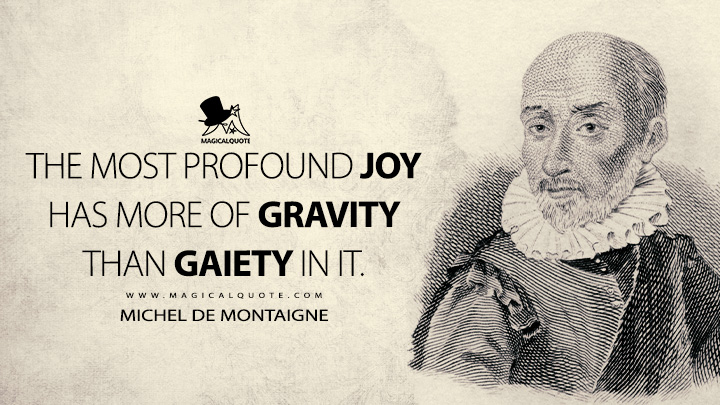
The most profound joy has more of gravity than gaiety in it.The works of Michael de Montaigne (ed. J. W. Moore, 1849), Book II, Chapter XX, Page 339
The deepest forms of joy are often quieter and more reflective, not the loud or frivolous kind associated with temporary pleasure. True joy is rooted in meaning, contemplation, and inner peace, which brings a sense of gravity rather than the lightheartedness of fleeting happiness. This quote invites us to shift our focus from transient joys to more lasting, meaningful experiences that provide deeper fulfillment.
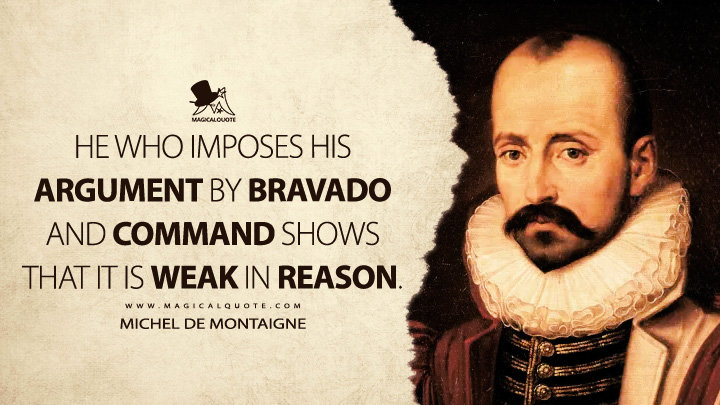
He who imposes his argument by bravado and command shows that it is weak in reason.The Complete Works of Montaigne (tr. Frame, ed. Stanford University Press, 1958), Book III, Chapter 11, Page 789
Using forceful tactics like bravado or command in argumentation is often a sign of weakness, not strength. The true strength in argument lies in reason and understanding, not in trying to dominate others with force or aggression. This quote encourages a shift toward calm, rational dialogue and emphasizes the importance of listening and reasoning over winning through intimidation.
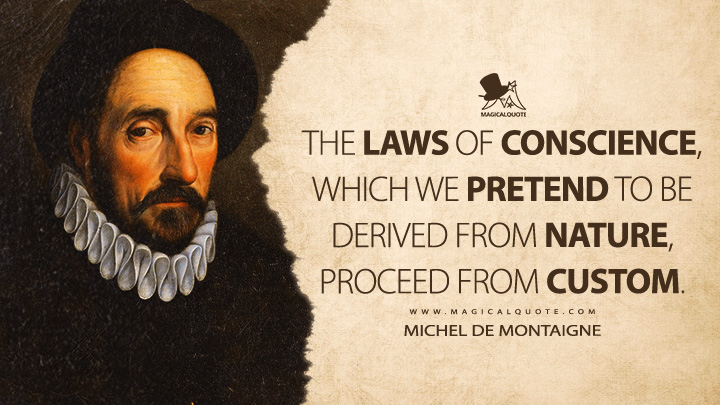
The laws of conscience, which we pretend to be derived from nature, proceed from custom.Essays of Montaigne (ed. William Carew Hazlitt, 1877), Volume I, Book I, Chapter 22, Page 124

Only the fools are certain and assured.The Complete Works of Montaigne (tr. Frame, ed. Stanford University Press, 1958), Book I, Chapter 26, Page 111
True wisdom lies in recognizing the limits of our knowledge. Those who are overly confident or unwavering in their beliefs are often the ones who miss deeper insights. This quote invites us to embrace uncertainty and cultivate humility, encouraging openness and flexibility rather than rigid certainty.
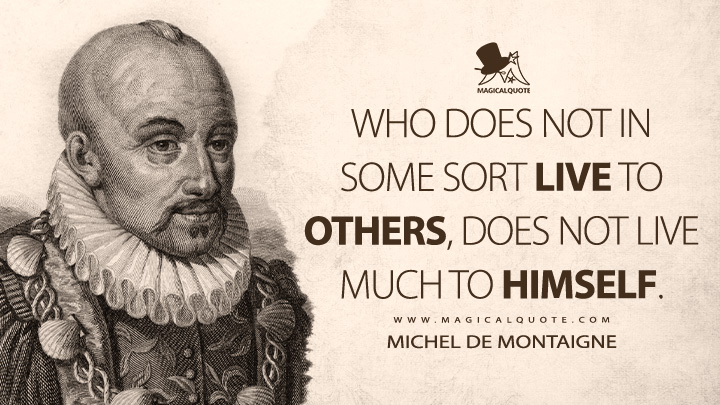
Who does not in some sort live to others, does not live much to himself.The works of Michael de Montaigne (ed. J. W. Moore, 1849), Book III, Chapter X, Page 492
Our lives gain purpose and depth through our relationships with others. To live fully, we must engage with and contribute to the lives of those around us. This quote encourages a mindset shift towards interdependence and community, highlighting the importance of empathy, connection, and shared experiences in leading a meaningful life.

He that had never seen a river, imagined the first he met with to be the sea.Essays of Montaigne (ed. William Carew Hazlitt, 1877), Volume I, Book I, Chapter 26, Page 218
This quote reminds us that limited experiences can shape our perceptions and lead to overgeneralizations. It encourages a shift toward open-mindedness and curiosity, urging us to explore beyond initial impressions. By embracing a broader perspective, we can avoid making assumptions and foster a deeper, more accurate understanding of the world.
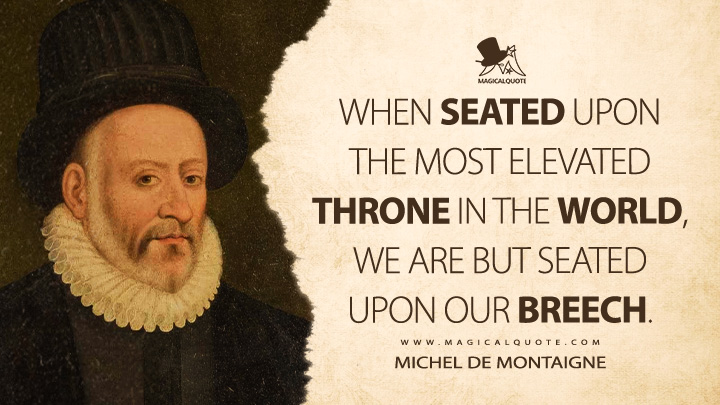
When seated upon the most elevated throne in the world, we are but seated upon our breech.Essays of Montaigne (ed. William Carew Hazlitt, 1877), Volume III, Book III, Chapter 13, Page 449
Montaigne's quote highlights the fleeting nature of power and status. Regardless of external positions or titles, we remain fundamentally human, subject to the same physical and existential realities. The insight encourages a shift from placing excessive value on external achievements to focusing on inner contentment and humility. True fulfillment comes from self-awareness, not status.
References
- ↑Université Bordeaux Montaigne. Bordeaux’s humanist university.
- ↑National Day Archives. National Essay Day.
- ↑Wang DA; Hagger MS; Chatzisarantis NLD. Ironic Effects of Thought Suppression: A Meta-Analysis. Perspect Psychol Sci. 2020 May;15(3):778-793. doi: 10.1177/1745691619898795. Epub 2020 Apr 14. PMID: 32286932.
Disclosure: Our content is reader-supported. If you click on some of our links, we may earn a commission. Read our editorial process.