Ibsen’s 25 Most Memorable Quotes and What They Teach Us
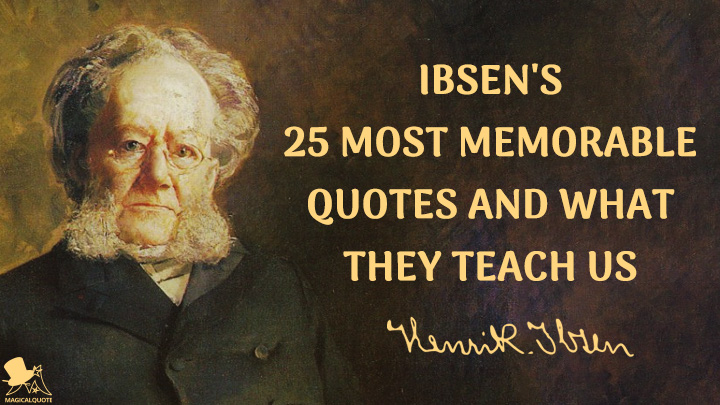
Henrik Ibsen (born March 20, 1828, Skien, Norway – died May 23, 1906, Kristiania [now Oslo], Norway) was a Norwegian playwright and poet who greatly influenced the development of modern theatre. Known for his groundbreaking works, including A Doll’s House, Hedda Gabler, and Ghosts, Ibsen’s plays challenged societal norms, particularly around gender roles, marriage, and personal freedom.
Through his realistic, psychologically complex characters, Ibsen critiqued the constraints of social and familial expectations, encouraging audiences to question conventional values. His focus on individual autonomy and moral responsibility made him a key figure in the development of modern drama.
Fun Facts
-
- Ibsen’s first play, Catilina, debuted in 1850 under the pseudonym Brynjolf Bjarme.[1]
- In 1864, Ibsen received a scholarship that allowed him to leave Norway. He spent the next 27 years living abroad, primarily in Italy and Germany.[2]
- Ibsen’s last words were reportedly, “To the contrary!” This response came after a nurse informed a visitor he was feeling better, highlighting his sharp wit even in his final moments.[3]
Ibsen’s works continue to influence literature, theatre, and social thought, provoking debates on personal identity, equality, and societal change.
The strongest man in the world is he who stands most alone. An Enemy of the People (1882); The Collected Works of Henrik Ibsen (ed. William Heinemann, 1907), Volume VIII, Page 188
By embracing solitude, individuals cultivate inner strength and resilience, gaining the confidence to face life's challenges independently. Ibsen's quote encourages emotional growth and self-discovery, reminding us that true strength comes from standing firm in our own convictions, regardless of external influence.
A thousand words leave not the same deep print as does a single deed. Brand (1866), (ed. J. M. Dent, 1961), Page 51
While words may be fleeting, a meaningful act can leave a lasting impression. This quote encourages individuals to take decisive action rather than merely talking about their intentions, fostering authenticity and more profound connections through tangible contributions to the world around them.
It is only through his present and his future that a man can atone for his past. John Gabriel Borkman (1896); The Collected Works of Henrik Ibsen (ed. William Heinemann, 1907), Volume XI, Page 282
Ibsen's quote reflects on the importance of personal growth and redemption. Though the past is irreversible, one's current actions and future decisions can offer the opportunity for redemption.

The most dangerous foe to truth and freedom in our midst is the compact majority.An Enemy of the People (1882); The Collected Works of Henrik Ibsen (ed. William Heinemann, 1907), Volume VIII, Page 133
When the majority prioritizes consensus over truth, it undermines freedom of thought and expression. This quote emphasizes the importance of diverse perspectives and the need to protect intellectual freedom from the tyranny of the masses.

Don’t use that foreign word: ideals. We have the excellent native word: lies. The Wild Duck (1884); The Collected Works of Henrik Ibsen (ed. William Heinemann, 1907), Volume VIII, Page 371
Ibsen critiques the concept of ideals, suggesting that lofty principles often disguise falsehoods or unrealistic expectations. This quote challenges us to scrutinize idealistic beliefs that may be disconnected from reality, urging a more pragmatic, grounded approach to life and values.
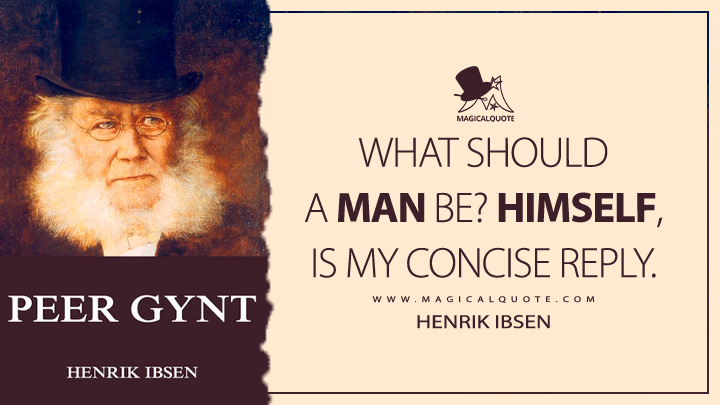
What should a man be? Himself, is my concise reply.Peer Gynt (1867); The Collected Works of Henrik Ibsen (ed. William Heinemann, 1907), Volume IV, Page 122
A person's primary responsibility is to remain true to their identity and values rather than conforming to external expectations. This quote encourages self-acceptance and personal integrity as essential elements of a meaningful life.
A man should never put on his best trousers when he goes out to battle for freedom and truth.An Enemy of the People (1882); The Collected Works of Henrik Ibsen (ed. William Heinemann, 1907), Volume VIII, Page 153
This quote highlights that seeking freedom and truth demands sacrifice and discomfort. Ibsen suggests that one should not be concerned with superficial appearances when engaging in significant struggles, as the fight for justice demands focus and sincerity above all else.
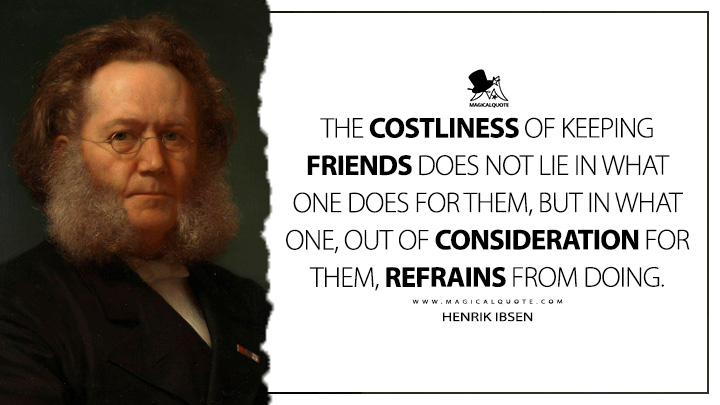
The costliness of keeping friends does not lie in what one does for them, but in what one, out of consideration for them, refrains from doing.Letter to George Brandes (March 6, 1870); The Correspondence of Henrik Ibsen (ed. Hodder and Stoughton, 1905), Page 183
Ibsen emphasizes that true friendship often requires restraint and self-awareness. Maintaining meaningful relationships is not just about what we do for others but also about respecting their boundaries and refraining from actions that may harm or inconvenience them.
Castles in the air – they are so easy to take refuge in. And so easy to build, too. The Master Builder (1892); The Collected Works of Henrik Ibsen (ed. William Heinemann, 1912), Volume X, Page 338
It's easy to picture idealized worlds, but these fantasies provide little substance or foundation. This quote calls for a grounded approach to life, reminding us that aspirations should be rooted in reality.
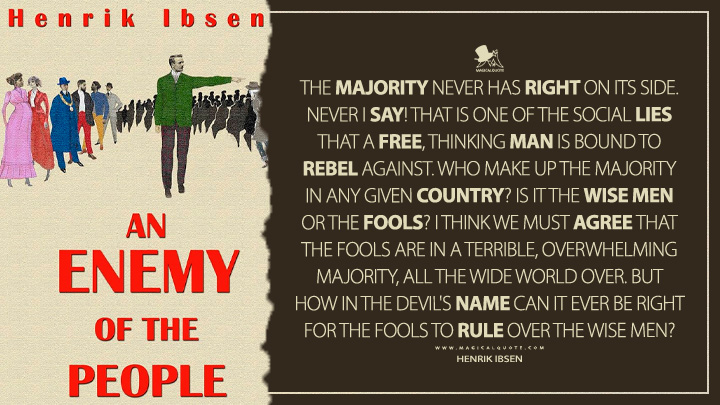
The majority never has right on its side. Never I say! That is one of the social lies that a free, thinking man is bound to rebel against. Who make up the majority in any given country? Is it the wise men or the fools? I think we must agree that the fools are in a terrible, overwhelming majority, all the wide world over. But how in the devil’s name can it ever be right for the fools to rule over the wise men?An Enemy of the People (1882); The Collected Works of Henrik Ibsen (ed. William Heinemann, 1907), Volume VIII, Page 134
This quote challenges the conventional wisdom that the majority opinion is always correct. Ibsen advocates for intellectual autonomy and the importance of questioning societal norms. It encourages individuals to prioritize critical thinking over conformity, embracing the courage to defy popular opinion in pursuit of truth and wisdom.
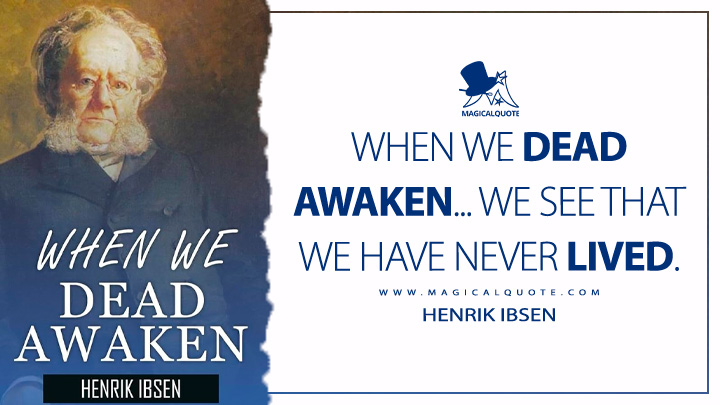
When we dead awaken… We see that we have never lived. When We Dead Awaken (1899); The Collected Works of Henrik Ibsen (ed. William Heinemann, 1907), Volume XI, Page 431-2
Ibsen provocatively suggests that many people go through life without truly engaging with it, perhaps due to societal constraints or personal complacency. This quote calls for greater self-awareness and the courage to live authentically, urging us to awaken to a fuller, more intentional existence.
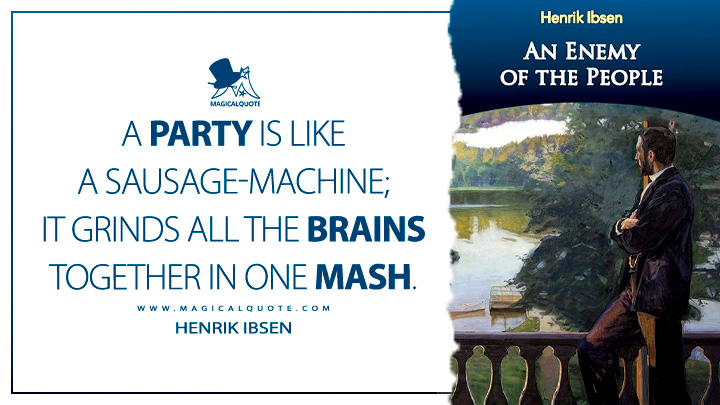
A party is like a sausage-machine; it grinds all the brains together in one mash.An Enemy of the People (1882); The Collected Works of Henrik Ibsen (ed. William Heinemann, 1907), Volume VIII, Page 160
Ibsen criticizes how the homogenizing nature of political parties or groupthink suppresses individual thought and innovation in favor of consensus. This quote highlights the dangers of conformity and the loss of critical thinking within organized movements or institutions.
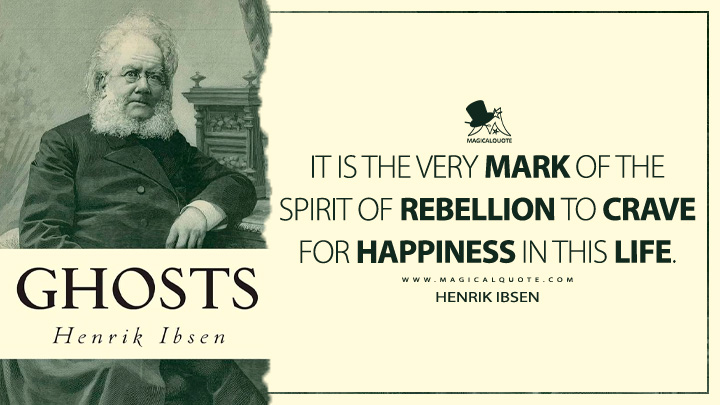
It is the very mark of the spirit of rebellion to crave for happiness in this life. Ghosts (1881); The Collected Works of Henrik Ibsen (ed. William Heinemann, 1906), Volume VII, Page 201
Ibsen links rebellion with pursuing personal happiness and challenging societal or institutional forces that limit individual freedom. The quote encourages embracing one's right to seek joy and fulfillment, even if it means resisting traditional expectations or norms.

The masses are nothing but the raw material that must be fashioned into a People.An Enemy of the People (1882); The Collected Works of Henrik Ibsen (ed. William Heinemann, 1907), Volume VIII, Page 138
Ibsen reflects on the potential of individuals within society. While the masses may lack direction or purpose, they hold the potential for transformation. This quote suggests that society's strength lies in its capacity to educate and bring together the masses, fostering a more informed and unified community.
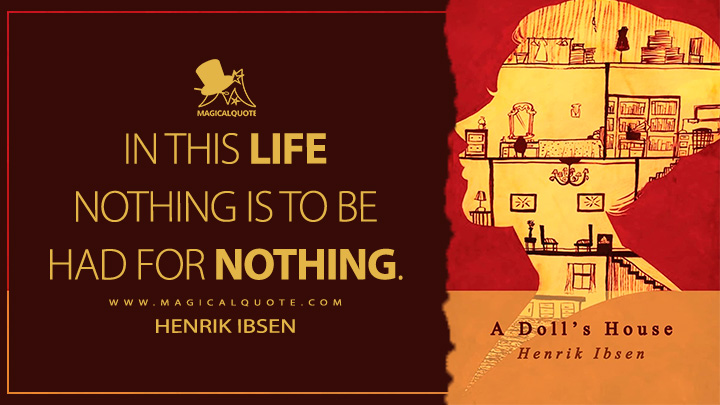
In this life nothing is to be had for nothing.A Doll's House (1879), The Collected Works of Henrik Ibsen (ed. William Heinemann, 1906), Volume VII, Page 128
This quote reminds us that everything worthwhile requires hard work and commitment, urging individuals to take responsibility for their choices and actions rather than expecting rewards without effort.

The state has its root in Time: it will have its culmination in Time.Letter to Georg Brandes (February 17, 1871); The Correspondence of Henrik Ibsen (ed. Hodder and Stoughton, 1905), Page 209
Ibsen reflects on the transient nature of political power and governance. He suggests that the state, like all institutions, evolves and will eventually reach its conclusion. This perspective invites reflection on the impermanence of political systems and the need for adaptability and change.
The Collected Works of Henrik Ibsen on Amazon
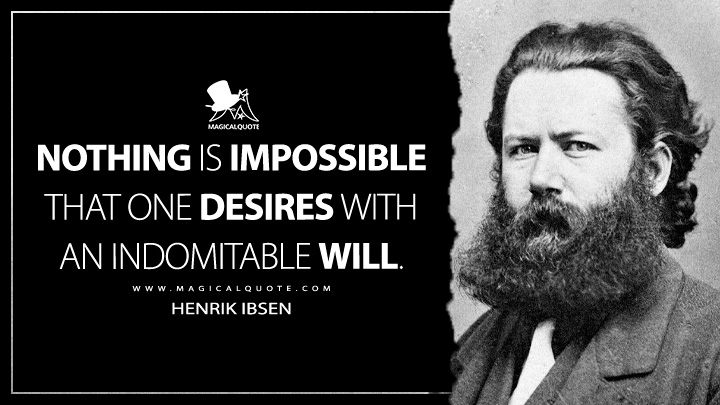
Nothing is impossible that one desires with an indomitable will.Letter to Magdalene Thoresen (March 31, 1868); The Correspondence of Henrik Ibsen (ed. Hodder and Stoughton, 1905), Page 156
This quote highlights that with determination and a clear sense of purpose, you can overcome any barrier, no matter how difficult. It encourages individuals to persevere through challenges and trust in the power of their own will.

The worst that a man can do to himself is to do injustice to others.Letter to Bjørnstjerne Bjørnson (December 28, 1867); The Correspondence of Henrik Ibsen (ed. Hodder and Stoughton, 1905), Page 149
Ibsen suggesting that injustice is the greatest self-sabotage. This quote highlights the moral responsibility everyone has to treat others with fairness and respect, emphasizing that ethical conduct toward others is integral to personal integrity.
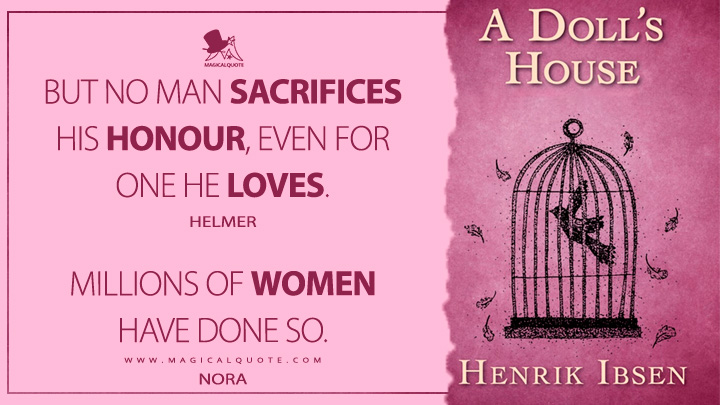
Helmer: But no man sacrifices his honour, even for one he loves.
Nora: Millions of women have done so.
A Doll's House (1879), The Collected Works of Henrik Ibsen (ed. William Heinemann, 1906), Volume VII, Page 151
This exchange from A Doll's House critiques societal expectations placed on women. Nora's response highlights the harsh reality that many women have compromised their honor and integrity for love or societal approval. Ibsen uses this dialogue to challenge the gendered expectations that limit women's autonomy.
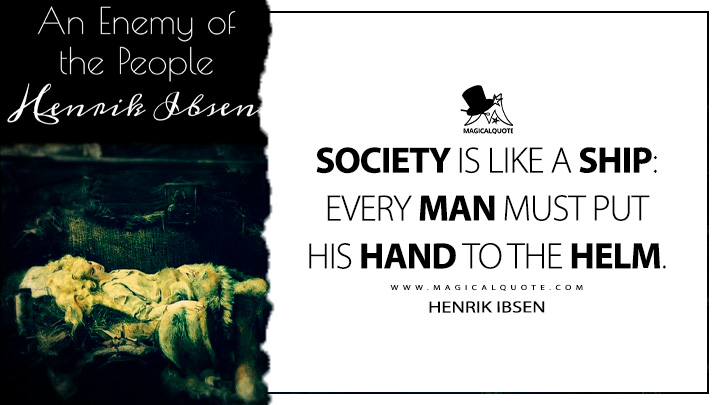
Society is like a ship: every man must put his hand to the helm.An Enemy of the People (1882); The Collected Works of Henrik Ibsen (ed. William Heinemann, 1907), Volume VIII, Page 21
Ibsen emphasizes the importance of shared responsibility within a community. Just as every person aboard a ship must be ready to steer, individuals in society must be willing and able to contribute to decision-making and leadership. This quote encourages active participation and accountability in a community's collective well-being.
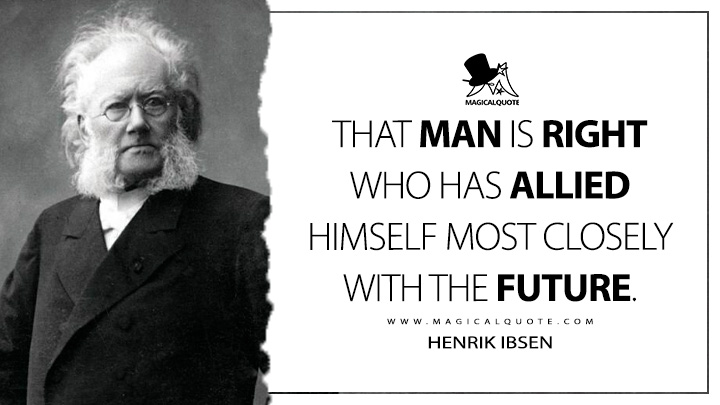
That man is right who has allied himself most closely with the future.Letter to George Brandes (January 3, 1882); The Correspondence of Henrik Ibsen (ed. Hodder and Stoughton, 1905), Page 350
Ibsen suggests that those who focus on progress and the potential of the future are on the right path. By aligning with forward-thinking ideas and embracing change, individuals can navigate challenges and help shape a better, more enlightened world.
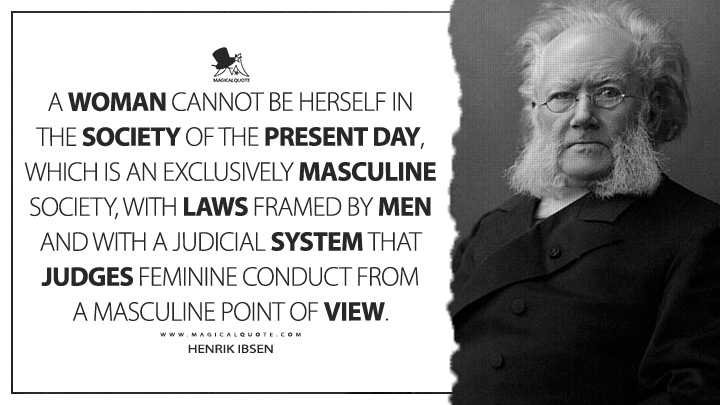
A woman cannot be herself in the society of the present day, which is an exclusively masculine society, with laws framed by men and with a judicial system that judges feminine conduct from a masculine point of view.Notes for the Modern Tragedy (October 19, 1878); The Collected Works of Henrik Ibsen (ed. William Heinemann, 1907), Volume XII, Page 91
Ibsen critiques a society structured around male perspectives, where men define the roles and judgments that confine women. He points out the injustice in a system that fails to recognize or respect women's individuality and autonomy. This quote calls for society to reevaluate its norms, urging a shift toward a more inclusive and equitable view of gender, where women have the freedom to authentically express and define their identities.
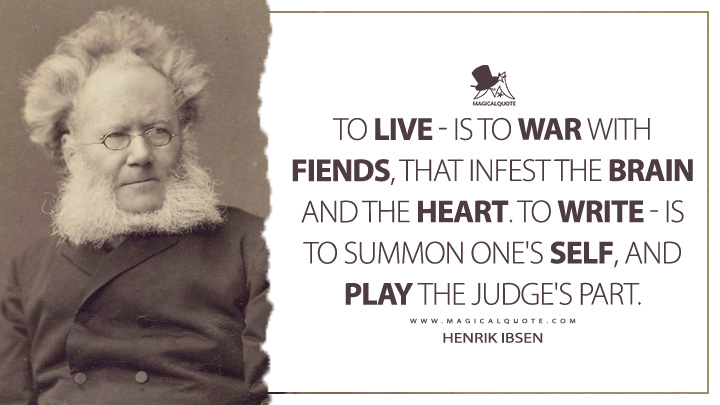
To live – is to war with fiends, that infest the brain and the heart. To write – is to summon one’s self, and play the judge’s part.Letter to Ludwig Passarge (June 16, 1880); The Correspondence of Henrik Ibsen (ed. Hodder and Stoughton, 1905), Page 334
Ibsen reflects on the internal battles that shape the human experience, where living requires a constant struggle against inner demons, doubts, and fears. In contrast, writing is portrayed as a means of confronting these challenges, a way to separate oneself from the chaos within and observe it critically. The quote underscores the cathartic power of self-expression and the writer’s role in holding a mirror to the complexities of the human psyche, ultimately serving as both creator and judge of their inner world.
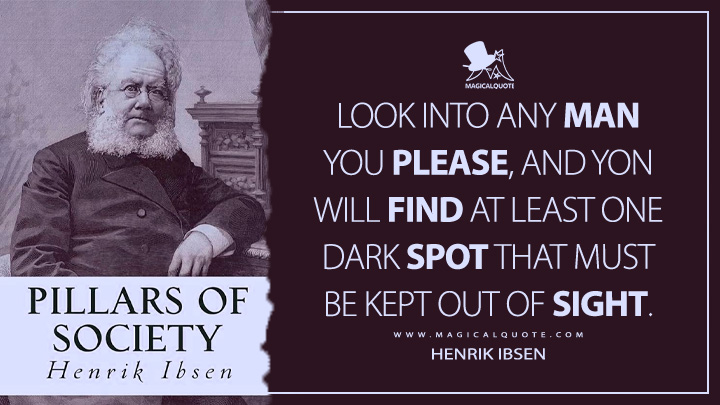
Look into any man you please, and yon will find at least one dark spot that must be kept out of sight. The Pillars of Society (1877); The Collected Works of Henrik Ibsen (ed. William Heinemann, 1906), Volume VI, Page 110
Ibsen highlights the inherent flaws and hidden darkness in every individual. No one is without their burdens, secrets, or imperfections, and this quote serves as a reminder of the complexity of human nature. It suggests that beneath the surface of every person, there are parts of themselves that they conceal, illustrating the universal truth that all people wrestle with their inner struggles. The quote calls for empathy and understanding, acknowledging that all carry hidden burdens.
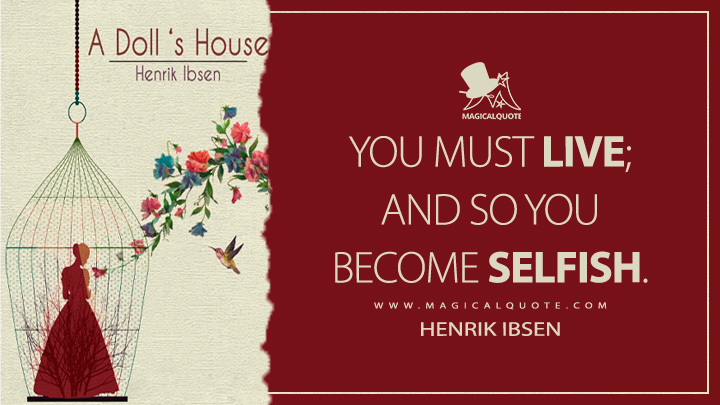
You must live; and so you become selfish.A Doll's House (1879), The Collected Works of Henrik Ibsen (ed. William Heinemann, 1906), Volume VII, Page 21
Ibsen comments on the inevitability of self-interest in human existence. To survive and navigate life's challenges, individuals often have to prioritize their own needs and desires, sometimes at the expense of others. This quote explores the tension between personal survival and communal responsibility, suggesting that living inherently cultivates a form of selfishness. It encourages reflection on the balance between self-preservation and the ability to maintain compassion and connection with others.
References
- ↑Wikipedia. Henrik Ibsen.
- ↑Telemark Museum. Facts about Henrik Ibsen.
- ↑StudySmarter. Henrik Ibsen: Biography & Facts & Education.
Disclosure: Our content is reader-supported. If you click on some of our links, we may earn a commission. Read our editorial process.