To finish a work? To finish a picture? What nonsense! To finish it means to be through with it, to kill it, to rid it of its soul, to give it its final blow: the most unfortunate one for the painter as well as for the picture.
Those were the endings I found solace in. The ones that said, Yes, you have lost something, but maybe, someday, you’ll find something too.
This is your life, and it’s ending one minute at a time.
There is no lonelier man in death, except the suicide, than that man who has lived many years with a good wife and then outlived her. If two people love each other there can be no happy end to it.
There are no endings, and never will be endings, to the turning of the Wheel of Time. But it was an ending.
There are always loose ends in real life.
The world will certainly not come to an end if there are fewer bad men.[Die Welt wird keinesweges dadurch untergehen, daß der bösen Menschen weniger wird.]
The end of a story must be stronger rather than weaker than the beginning; since it is the end which contains the denouement or culmination, and which will leave the strongest impression upon the reader.
The end is near. I hear a noise at the door, as of some immense slippery body lumbering against it. It shall not find me. God, that hand! The window! The window!
Sometimes a girl has to stop waiting around and come up with her own fairytale ending.
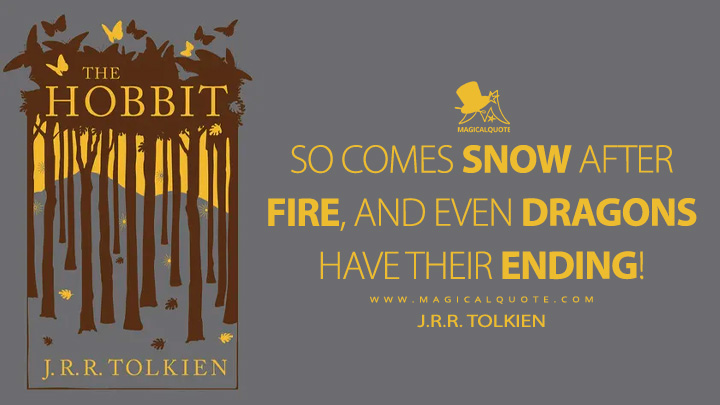
So comes snow after fire, and even dragons have their ending!
Not only are there no happy endings. There aren’t even any endings.