Pity is for the living, envy is for the dead.
What woman wants pity? A man’s sternness is to us our only pardon.[Quelle est la femme qui s’accommode de la pitié? Impitoyables, votre rigueur est une grâce pour nous.]
We are seldom sorry for those who need and crave our pity – we reserve this for those who, by other means, make us exercise the abstract function of pity.
To love with the spirit is to pity, and he who pities most loves most.[Amar en espíritu es compadecer, y quien más compadece más ama.]
The man who really merits pity is the man who has been down from the start, and faces poverty with a blank, resourceless mind.
Terror in the house does roar; but pity stands before the door.
Pity must join together those whom wrath has torn in sunder.
Pity is the feeling which arrests the mind in the presence of whatsoever is grave and constant in human sufferings and unites it with the human sufferer.
Our human compassion binds us the one to the other – not in pity or patronizingly, but as human beings who have learnt how to turn our common suffering into hope for the future.
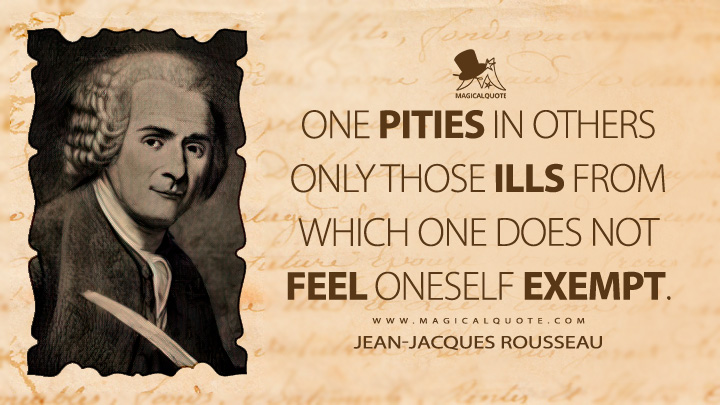
One pities in others only those ills from which one does not feel oneself exempt.[Pitié des infortunés; quand on est témoin de leur mal, on en souffre.]
More helpful than all wisdom is one draught of simple human pity that will not forsake us.
Cherish pity, lest you drive an angel from your door.