Today’s young people want to know everything about everyone. They think talking about a problem will solve it. I come from a quieter generation. We understand the value of forgetting, the lure of reinvention.
To solve someone is to want to repair them: to diagnose a problem and then not try to fix that problem seemed not only neglectful but immoral.
There’s no problem, only solutions.
There were eternal problems: suffering; death; the poor.
The worthwhile problems are the ones you can really solve or help solve, the ones you can really contribute something to.
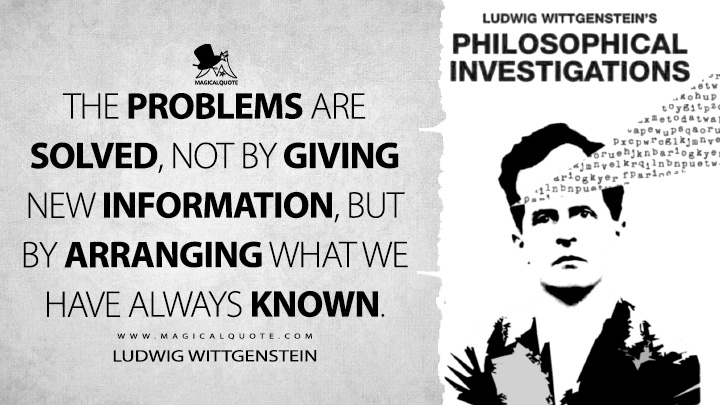
The problems are solved, not by giving new information, but by arranging what we have always known.[Die Probleme werden gelöst, nicht durch Beibringen neuer Erfahrung, sondern durch Zusammenstellung des längst Bekannten.]
The problem with having a sense of humor is often that people you use it on aren’t in a very good mood.
The only people without problems are those in cemeteries. It is not what happens to us that separates failures from successes. It is how we perceive it and what we do about what “happens” that makes the difference.
The most terrible obstacles are such as nobody can see except oneself.
The greatest and most important problems of life are fundamentally insoluble. They must be so, for they express the necessary polarity inherent in every self-regulating system. They can never be solved, but only outgrown.
The great problems of life, including of course sex, are always related to the primordial images of the collective unconscious.[Die grossen Lebensprobleme zu denen u. a. auch die Sexualität gehört, stehen immer in Beziehung zu den urtümlichen Bildern des collektiven Unbewussten.]
The answer is simple: because we can solve them!