The more refined the more unhappy.[Чем культурнее, тем несчастнее.]
The man to whom life is alien, who is incapable of living, nothing else remains for him, but to become an official.[Kому чужда жизнь, кто неспособен к ней, тому больше ничего не остается, как стать чиновником.]
The life of a man is like a flower, blooming so gaily in a field. Then, along comes a goat, he eats it, and the flower is gone![Жизнь человеческая подобна цветку, пышно произрастающему в поле: пришел козел, съел и – нет цветка…]
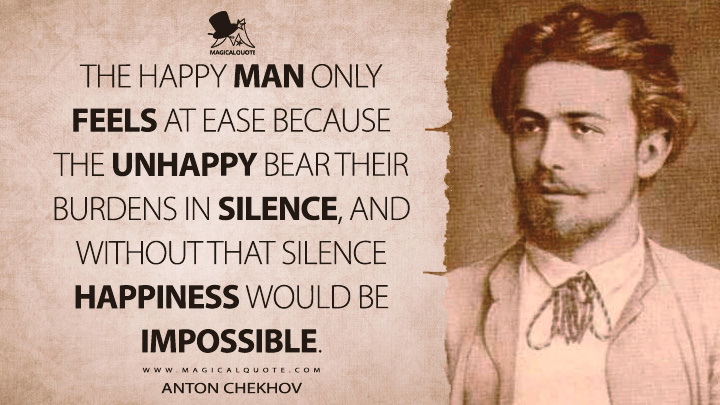
The happy man only feels at ease because the unhappy bear their burdens in silence, and without that silence happiness would be impossible.[Счастливый чувствует себя хорошо только потому, что несчастные несут свое бремя молча, и без этого молчания счастье было бы невозможно. ]
The fear of death is an animal passion which must be overcome. Only those who believe in a future life and tremble for sins committed, can logically fear death.[Страх смерти – животный страх… Надо подавлять его. Сознательно боятся смерти только верующие в вечную жизнь, которым страшно бывает своих грехов.]
Reason and justice tell me that in the electricity and heat of love for man there is something greater than chastity and abstinence from meat.[Расчетливость и справедливость говорят мне, что в электричестве и паре любви к человеку больше, чем в целомудрии и в воздержании от мяса.]
Perhaps a man has a hundred senses, and when he dies only the five known to us are destroyed and the remaining ninety-five are left alive.[Быть может, у человека сто чувств, и со смертью погибают лишь только пять известных нам, а последние девяносто пять остаются живы.]
People who lead a solitary existence always have something in their hearts which they are eager to talk about.[У людей, живущих одиноко, всегда бывает на душе что-нибудь такое, что они охотно бы рассказали.]
People love talking of their diseases, although they are the most uninteresting things in their lives.[Человек любит поговорить о своих болезнях, а между тем это самое неинтересное в его жизни…]
People don’t notice whether it’s winter or summer when they’re happy.[Счастлив тот, кто не замечает, лето теперь или зима.]
One usually dislikes a play while writing it, but afterward it grows on one. Let others judge and make decisions.[Обыкновенно пьеса не нравится, когда пишешь ее, и потом не нравится; пусть уж судят и решают другие.]
One must never place a loaded rifle on the stage if it isn’t going to go off. It’s wrong to make promises you don’t mean to keep.[Нельзя ставить на сцене заряженное ружье, если никто не имеет в виду выстрелить из него. Нельзя обещать.]