Sometimes to some people violence provides a necessary outlet, an emotional release.
Nonviolence is a good policy when the conditions permit.
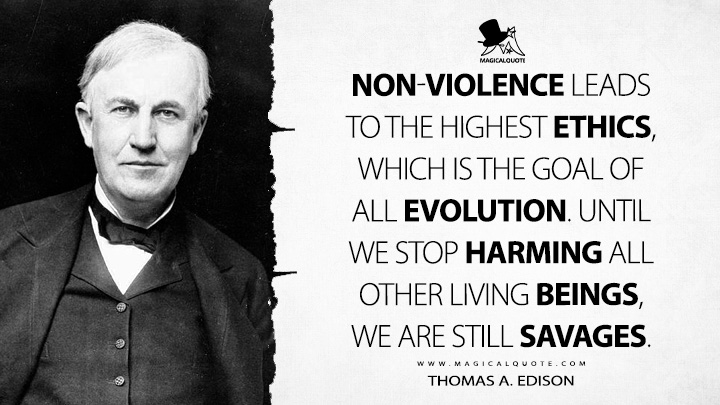
Non-violence leads to the highest ethics, which is the goal of all evolution. Until we stop harming all other living beings, we are still savages.
It will have blood; they say: blood will have blood.
It takes an enormous act of violence to begin something. I can’t begin. I simply jump over what should be the beginning. [Es ist eine ungeheuere Gewaltsamkeit, etwas anzufangen. Ich kann nicht anfangen. Ich springe einfach über das, was Anfang sein müßte, weg.]
It is the quietest and meekest people who are often capable of the most sudden and unexpected violence for the reason that when their control does snap, it does so entirely!
It is not violence that best overcomes hate – nor vengeance that most certainly heals injury.
It is as certain as it is strange that truth and error come from one and the same source. Thus it is that we are often not at liberty to do violence to error, because at the same time we do violence to truth.
In the world today, only a philosophy of eternity could justify non-violence.[Seule, dans le monde d’aujourd’hui, une philosophie de l’éternité peut justifier la non-violence.]
If somebody says, “I love you,” to me, I feel as though I had a pistol pointed at my head. What can anybody reply under such conditions but that which the pistol-holder requires? “I love you, too.”
I consider violence an uneconomical way of attaining an end. There are always better substitutes, though they may sometimes be a little less direct.
A belligerent state permits itself every such misdeed, every such act of violence, as would disgrace the individual.[Der kriegführende Staat gibt sich jedes Unrecht, jede Gewalttätigkeit frei, die den Einzelnen entehren würde.]